A missing or damaged chimney cap doesn’t just look bad — it’s one of the most common causes of water leaks, animal intrusion, and expensive masonry repairs. In this guide, we’ll cover what a chimney cap actually does, why it matters more than most homeowners realize, and walk through a real chimney cap repair we completed in Houston.
What Is a Chimney Cap?
A chimney cap is a covering installed over the top of your chimney flue, typically stainless steel, galvanized steel, or copper mesh set into a metal frame. It sits above the flue opening, shielding it from the outside while still allowing smoke and combustion gases to vent freely.
Why Chimney Caps Are Necessary
A chimney without a cap — or with a damaged one — is an open invitation to a long list of problems:
- Water intrusion. Rain running directly into an uncapped flue is one of the most common causes of chimney damage we see in Houston. Water inside the flue accelerates deterioration of the liner, the crown, and the masonry itself, and can eventually work its way into your fireplace or the walls around it.
- Animal entry. Birds, squirrels, and raccoons regularly look to chimneys as a ready-made den. Once inside, they can build nests that block airflow — a real fire and carbon monoxide risk — and nests are often difficult, and in some cases illegal, to remove once occupied.
- Debris and blockages. Leaves, sticks, and other debris can fall into an open flue and build up over time, restricting airflow and creating a fire hazard.
- Sparks and embers. A cap’s mesh screen helps contain sparks and embers from an active fire, reducing the risk of them landing on your roof or nearby vegetation.
- Downdrafts. Many cap designs also reduce wind-driven downdrafts that can push smoke back into your home instead of venting it outside.
A Real Chimney Cap Repair We Completed in Houston
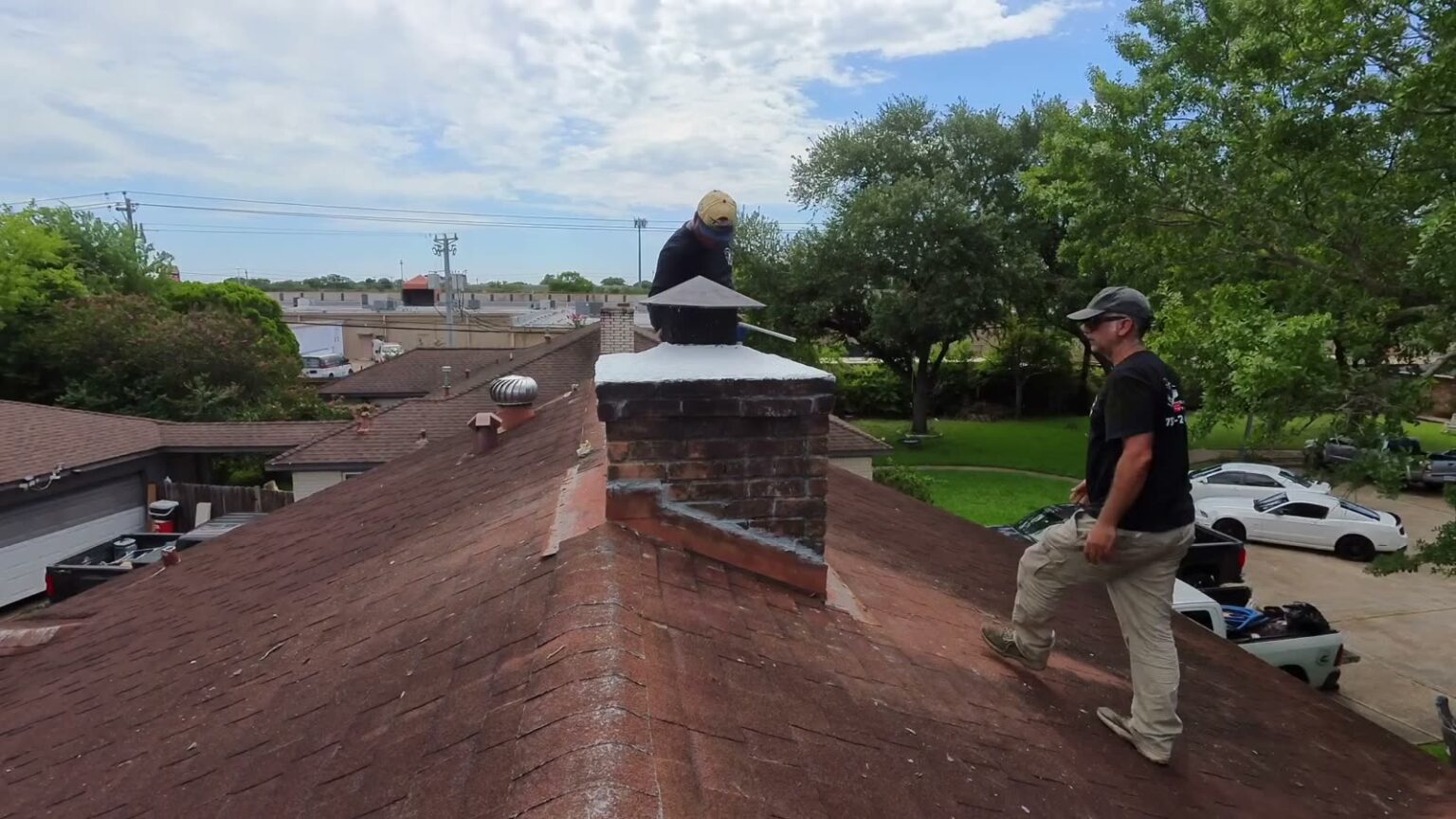
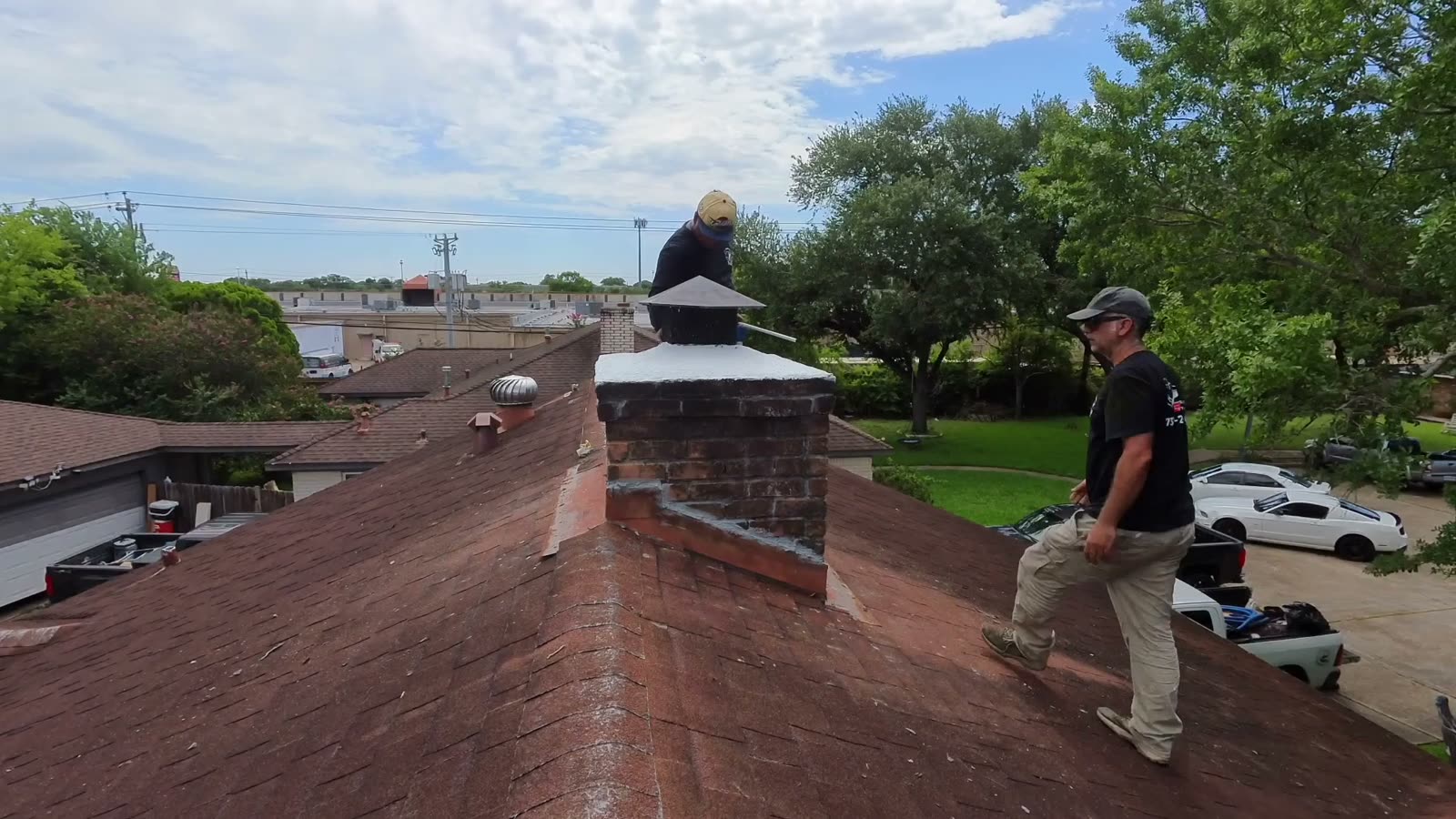
Here’s a recent example from our own work. This Houston homeowner had a missing chimney cap and a cracked chimney crown — the concrete slab at the very top of the chimney that the cap normally sits on. Without a cap, and with a crack in the crown itself, rainwater had a direct path into the flue every time it stormed, and the leak had already started showing up inside the home.
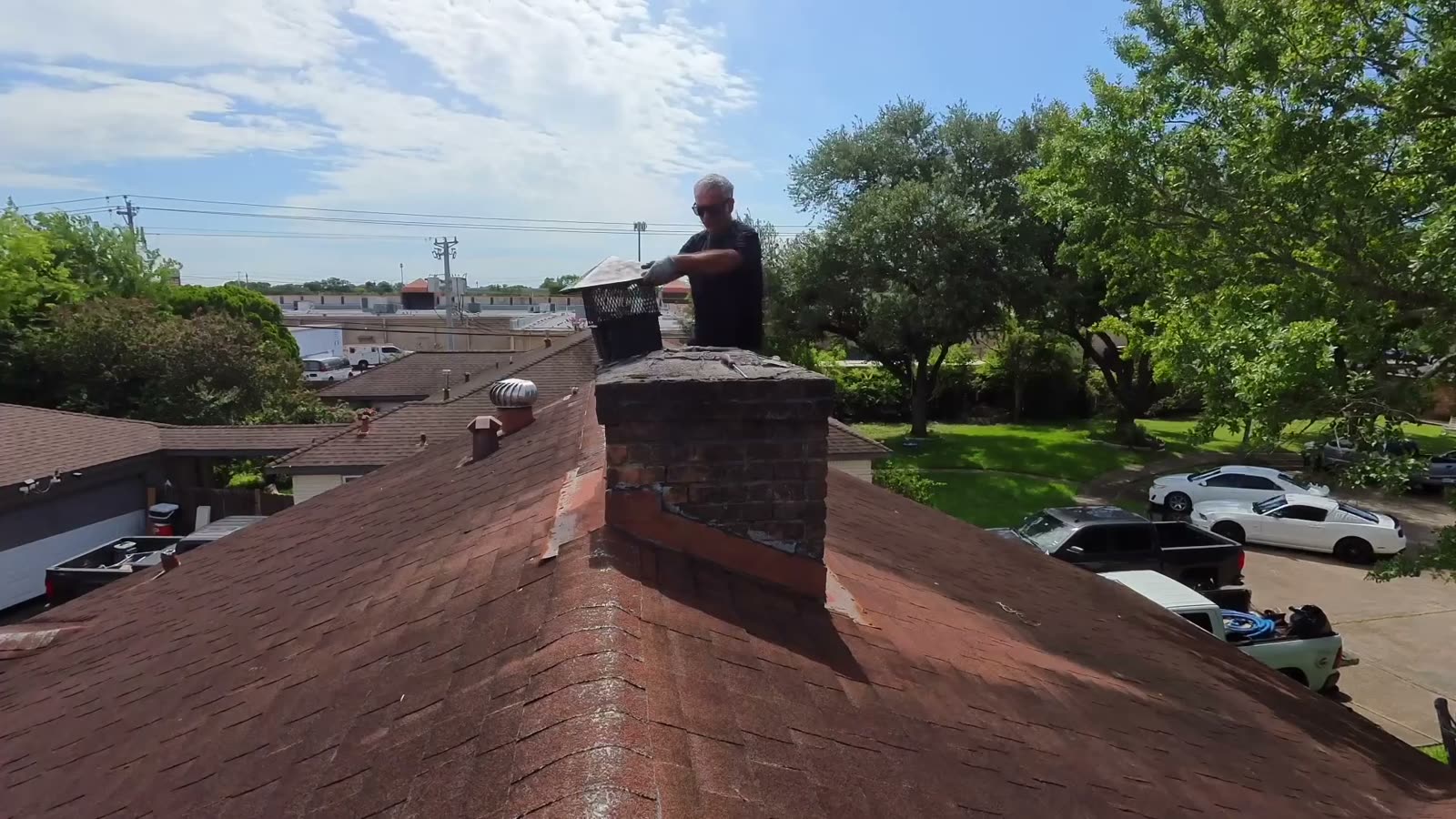
Our technician measured the flue, sealed the cracked crown, and installed a new, properly-sized cap secured directly to the masonry. The job addressed both problems at once: the crown seal stops water from getting into the masonry through the crack, and the new cap keeps rain, debris, and animals out of the flue going forward.
Signs You May Need a New Chimney Cap
- You can see daylight or sky when looking up your flue from inside
- Water stains around your fireplace or on the ceiling near the chimney
- A strong musty odor coming from the fireplace, especially after rain
- Visible cracks in the crown at the top of the chimney
- Evidence of animals — nesting material, droppings, or scratching sounds
- A cap that’s visibly bent, rusted through, or missing entirely
If any of these sound familiar, it’s worth having your chimney inspected before the next storm rather than after.
Professional Installation vs. DIY
Chimney caps come in a range of sizes and styles, and getting the fit right matters — a cap that’s too small won’t seal properly against wind-driven rain, and one that’s improperly secured can blow off in a storm, which is often exactly how a chimney ends up without a cap in the first place. Installation also usually means working on a steep, pitched roof at height, so most homeowners choose to have it done professionally rather than DIY.
Who We Are
Texas Family Chimney Care is a CSIA certified, family-owned chimney company serving Houston homeowners. We install and repair chimney caps, seal and rebuild damaged crowns, and handle chimney sweeping, inspection, and masonry repair. If your chimney cap is missing, damaged, or you’re not sure what condition it’s in, contact us and we’ll take a look.
Not sure what shape your chimney cap is in? Call us at (832) 870-3118 — right now we’re offering a $99 Level 2 Inspection, credited toward the job cost if the customer proceeds with the recommended work. See what a Level 2 inspection covers.